
Floors That Survive Water and Foot Traffic
Flooring Installation in Palm Coast for homes with moisture exposure and high-use areas
Laminate swells when wet, hardwood warps in humid climates, and tile cracks when subfloors shift beneath it. The flooring you choose determines whether spills, humidity, and daily wear cause permanent damage or simply wipe clean. G&G Quality Home Services Inc. installs LVP flooring, hardwood, ceramic and porcelain tile, and laminate in Palm Coast, matching material selection to room conditions and household activity. Proper subfloor preparation ensures that floors remain level and stable, preventing the squeaks, gaps, and surface cracks that develop when installation shortcuts are taken.
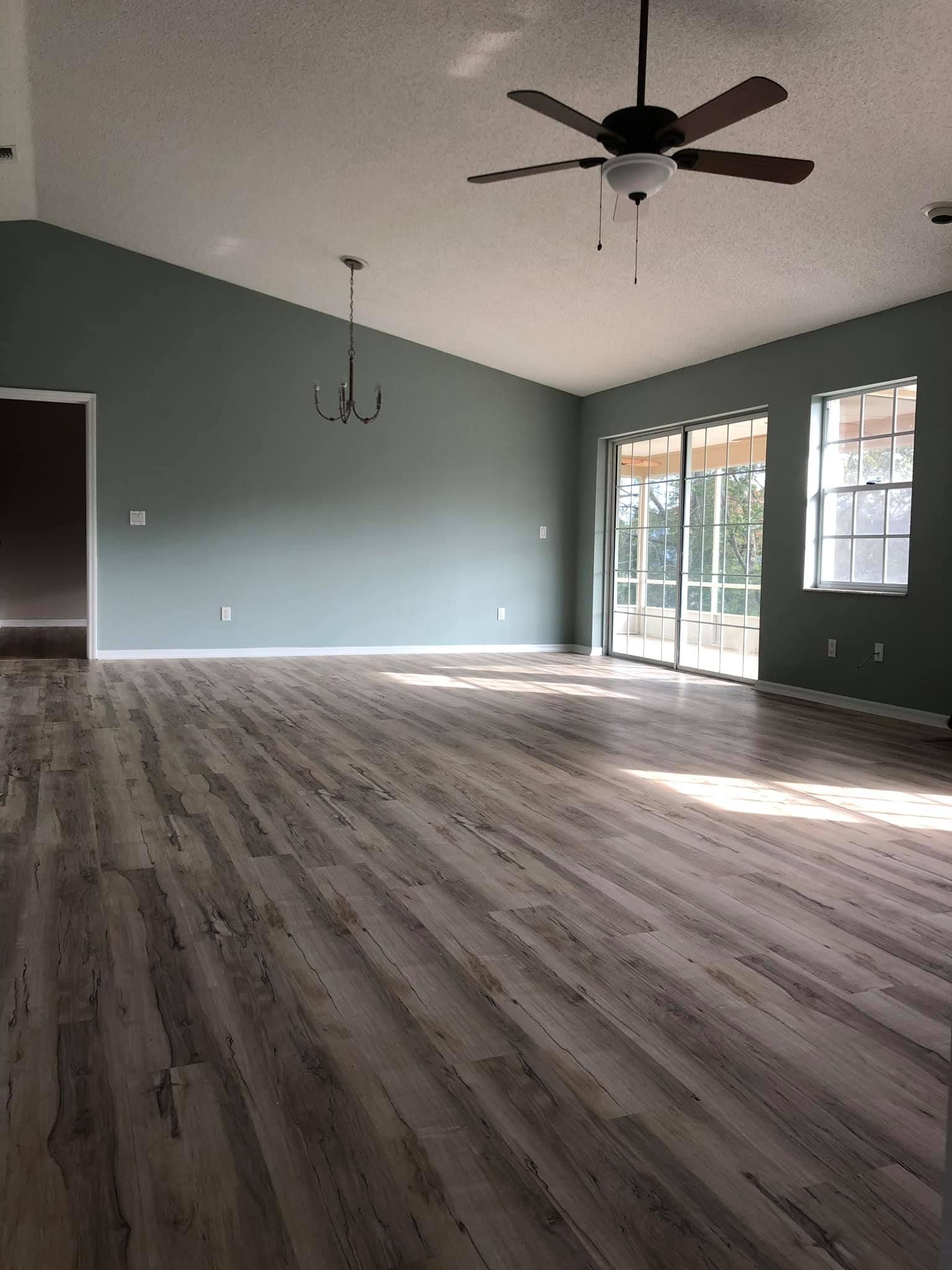
Flooring installation begins with subfloor inspection and repair to eliminate dips, weak spots, and moisture intrusion that cause future failure. LVP is installed in kitchens, bathrooms, and entryways where water resistance matters, while hardwood is sanded and refinished for a classic appearance in living and dining areas. Ceramic and porcelain tile are laid in moisture-prone zones with properly sealed grout, and laminate provides a cost-effective alternative in bedrooms and low-moisture spaces. Each material is selected based on durability requirements, climate exposure, and the level of maintenance homeowners are willing to perform.
Schedule an in-home estimate to review flooring samples and discuss material options for each room.
What Subfloor Preparation Prevents Long-Term
Floors fail when subfloors are uneven, damp, or structurally compromised, so installation always begins below the surface. Subfloors are inspected for rot, leveled with compound where necessary, and sealed against moisture that migrates up from crawl spaces or concrete slabs. LVP is locked together over underlayment that cushions footsteps and blocks sound transmission, while hardwood is nailed or glued depending on subfloor type. Tile requires a stable, flat base to prevent cracking, so any flexing or dips are corrected before mortar is spread.
Once installation is complete, you'll notice that floors feel solid underfoot without bouncing or creaking, spills on LVP and tile wipe up without staining or swelling the material, and hardwood develops a consistent finish that ages evenly across the surface. Grout lines on tile floors are sealed to resist moisture and dirt penetration, and transitions between different flooring types are finished with trim that prevents tripping hazards and visual gaps.
Material choice affects long-term performance in Florida's climate. LVP resists water and humidity without warping, making it suitable for areas where flooding or leaks are possible. Hardwood performs well in climate-controlled interiors but requires acclimation before installation to prevent expansion or contraction. Ceramic and porcelain tile are inert and unaffected by moisture, though grout requires sealing to prevent staining. Laminate offers the appearance of hardwood at lower cost but degrades if exposed to standing water.
Common Questions About This Service
Flooring selection and installation involve decisions about materials, durability, and long-term maintenance, so most homeowners want to understand how each option performs in real-world conditions.
What makes LVP flooring more durable than laminate?
LVP is constructed with a waterproof vinyl core that does not swell or delaminate when exposed to moisture, while laminate has a wood-based core that absorbs water and deteriorates. LVP also resists scratches and dents better than laminate, making it suitable for high-traffic areas and homes with pets.
How is hardwood flooring prepared for Florida's humidity?
Hardwood must acclimate to the home's interior humidity level for several days before installation, allowing the wood to expand or contract to its stable dimension. Once installed, it is sanded smooth and finished with polyurethane or oil-based sealers that protect against moisture and wear. Climate-controlled homes maintain stable humidity, reducing the risk of warping or gaps.
What type of tile is best for bathrooms and kitchens in Palm Coast?
Porcelain tile is denser and less porous than ceramic, making it more resistant to water absorption and staining. Both perform well when installed with waterproof membranes and sealed grout, but porcelain is preferred in areas with frequent water exposure like showers and entryways.
Why does subfloor condition affect how long flooring lasts?
Uneven or damaged subfloors cause flooring to flex, crack, or separate over time. Dips create voids where tile can crack, moisture intrusion causes wood-based materials to rot, and weak spots lead to squeaks and instability. Repairing and leveling the subfloor before installation prevents these failures.
When should hardwood be refinished instead of replaced?
If the existing hardwood has sufficient thickness above the tongue-and-groove joint, it can be sanded down to remove scratches, stains, and worn finish, then refinished with new sealer. Refinishing restores appearance and extends lifespan at a fraction of the cost of replacement, provided the wood is not warped or water-damaged beyond repair.
G&G Quality Home Services Inc. installs and refinishes flooring throughout Palm Coast, tailoring material selection to room conditions and household use. Call for a consultation to discuss flooring samples and installation timelines specific to your home.